
Proper lighting in educational institutions is much more than a technical issue. In schools, colleges, and universities, the right light is key to improving academic performance, reducing visual fatigue, and creating comfortable environments for both students and teachers.
In classrooms, different activities can be developed, each of which requires an appropriate space for them to be carried out normally, for example, computer labs, laboratories, gyms, libraries… We are talking about both lighting and architectural design, whether they are schools, institutes, or colleges.
It is important to consider that when it comes to lighting, the treatment of natural light is fundamental in educational institutions. Therefore, the orientation of the facades, as well as the arrangement and size of the windows and other light sources, are taken into account in their structures. However, artificial light does not always benefit students, which is where the distribution and design of artificial light become important.
UNE-EN 12464.1: Lighting in schools and colleges
In Europe, the main regulation is UNE-EN 12464-1, related to the lighting of indoor workplaces. This mandatory standard in our country establishes specific technical requirements for different environments, including educational centers. Its goal is to ensure indoor lighting that provides both students and teachers with a pleasant and stimulating environment that promotes learning, avoids visual strain, and reduces fatigue.
- Visually comfortable
- Suitable for the type of task
- Safe for users
- Energy efficient
In the specific case of schools, colleges, and universities, the regulation establishes parameters such as:
- Maintained average illuminance level (lux)
- Unified Glare Rating (UGRL)
- Color Rendering Index (Ra)
Recommended Lumens Table for Educational Centers
According to the UNE 12464-1 standard, these are the recommended illuminance values (lux) for different areas in educational centers:
Educational space | Em (lux) | UGRL | Ra |
General classrooms and tutoring | 300 luxes | 19 | 80 |
Evening classes / adult education | 500 luxes | 19 | 80 |
Reading rooms and libraries | 500 luxes | 19 | 80 |
Blackboards and demonstration tables | 500 luxes | 19 | 80 |
Art classes (general) | 500 luxes | 19 | 80 |
Technical drawing classes | 750 luxes | 16 | 80 |
Laboratories and practices | 500 luxes | 19 | 80 |
Circulation areas and hallways | 100 luxes | 25 | 80 |
Computer and language rooms | 300 luxes | 19 | 80 |
School cafeterias | 200 luxes | 22 | 80 |
School kitchens | 500 luxes | 22 | 80 |
Types of lighting fixtures for educational classrooms
We can consider these solutions as standard solutions that serve as a reference for regular spaces from a formal point of view. However, when the configuration of the classroom, whether due to the height or heights of the ceiling or its geometry, is not a perfect square or rectangle, another lighting design and planning must be created in accordance with the requirements of the spaces and structures.
Regarding the lighting fixtures, it is common to find removable modular ceilings in these centers measuring: 1200x300mm and 600x600mm, with a height between 2.40-2.80m. To ensure that we meet all standards, we can use recessed fixtures of the same module (600×600) with power ratings between 25 and 30W that have luminous fluxes less than or equal to 2,700 lumens, with a distance between fixtures of 2.4×1.8m, which will allow us to achieve illuminances less than or equal to 500lx, uniformities less than or equal to 0.60, and a UGR of the space less than or equal to 19.
If we want to use recessed downlights with a similar power, the result should vary little; we will need to verify the other parameters such as uniformity and glare, always relying on calculation programs and regulations that verify the desired parameters.
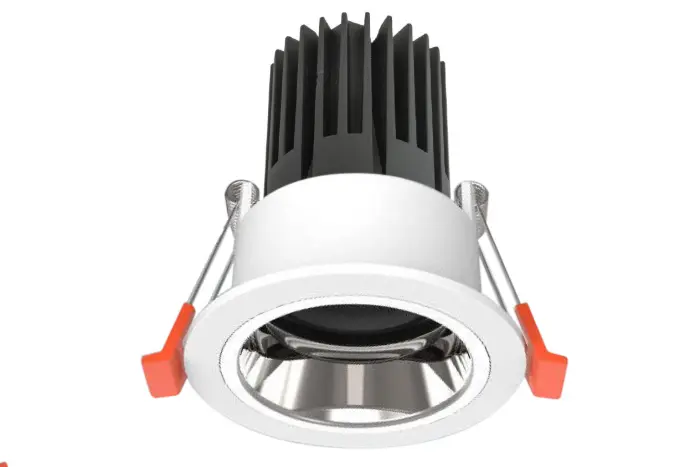
Corina
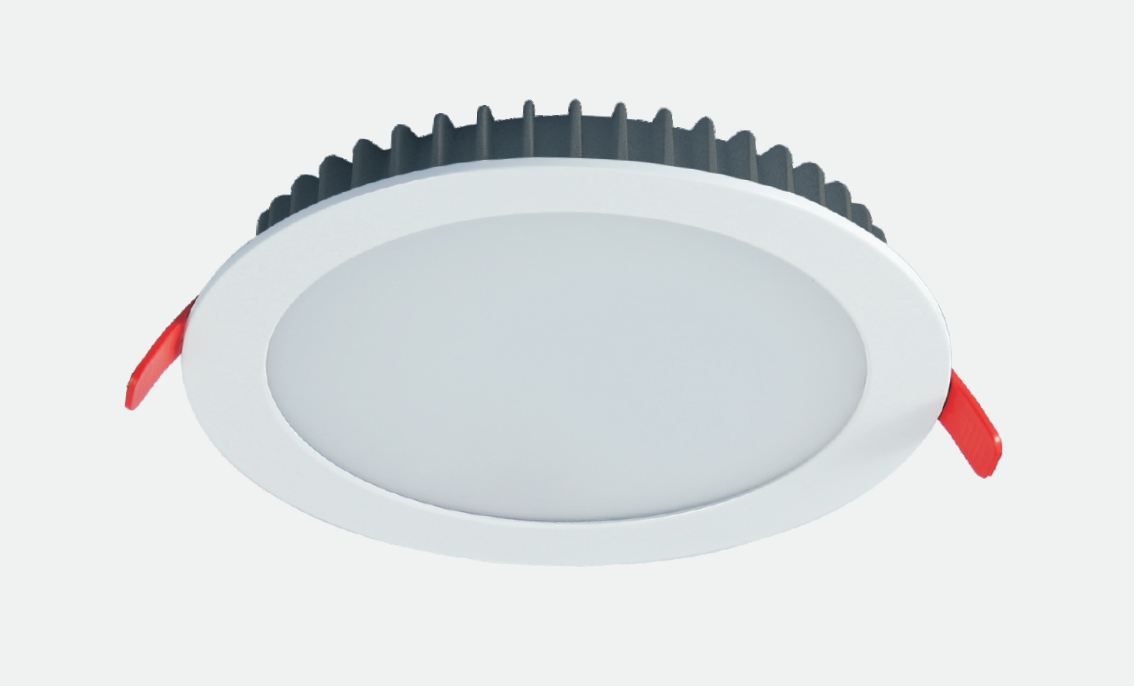
Horizon
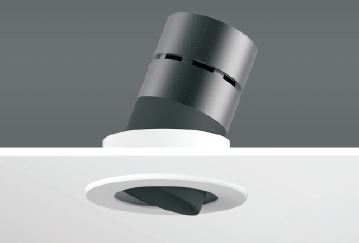
Minor
Recommendations and tips for proper lighting.
Adapt the design to the activity
Each classroom has different needs. A computer lab is not the same as a technical drawing room or a laboratory. The lighting project must take into account the type of visual task being performed.
Glare control
We will use the UGR metric to measure the glare from both a luminaire and the glare present in a space, as well as that which is experienced by a person in it. This should be equal to or less than 19 on a scale from 10 (no glare) to 30. For example, the value of 19 is not necessary in hallways, staircases, or storage areas.
The color of the lighting
Color chromatic reproduction must be taken into account according to the activity to be developed. For example, in a drawing and painting workshop, the chromatic value should be above 80 on a scale from 0 to 100, as there must be a perfect reproduction of colors. This value is provided by the light source; currently, most commercially available LEDs are at 80 or above 80. A value of 80 is considered a very good CRI, and a value of 90 is considered excellent CRI.
The uniformity
This concept refers to the balance between the lighting of each of the spaces, meaning that a classroom or room with significant differences in lighting would penalize some students' desks due to lack of light and at the same time others due to excess. The ratio between Emin and Emax gives us the uniformity of a space; in the case of a classroom, this ratio should always be less than or equal to 0.60. However, in drawing workshops or art classrooms, the value is more demanding, set at 0.70.
Regulatory and Technical Summary
This regulatory and technical compendium is present in the development of all Luxes systems for educational establishments. From the definition of the color spectrum to the selection of each lamp, everything is designed to provide a precise visual experience, without shadows, and energy-efficient.

BOE-A-1997-8669 Real Decreto 486/1997, de 14 de abril, por el que se establecen las disposiciones mínimas de seguridad y salud en los lugares de trabajo. (s. f.). https://www.boe.es/buscar/act.php?id=BOE-A-1997-8669
NTP 211: Iluminación de los centros de trabajo - PDF - Portal INSST - INSST. (s. f.). Portal INSST. https://www.insst.es/documentacion/colecciones-tecnicas/ntp-notas-tecnicas-de-prevencion/6-serie-ntp-numeros-191-a-225-ano-1989/ntp-211-iluminacion-de-los-centros-de-trabajo